

by Sarah Brady
For years, Duke Radiation Oncology has quietly built a reputation within military medicine. Graduates of the residency program have gone on to serve across the country and around the world – with some eventually returning to Duke as faculty, closing the loop on a service-oriented training legacy.
In the past few years, what was once a series of informal collaborations has taken shape as something more intentional: A formal military training track in partnership with the U.S. Army.
“The Army proposed this partnership,” said Joseph Salama, MD, residency program director and vice chair of education at Duke Radiation Oncology and chief of the radiation oncology service at the Durham VA Health Care System. That speaks to the credibility Duke has earned over years of training military physicians, often under unconventional circumstances.
One of those moments helped set more formal partnerships in motion.
“Ad hoc collaborations with the U.S. Navy were the foundation,” explained Dr. Salama, who highlighted the class of 2008 (Edward Miles, MD, and John Nelson, MD, now a physician at Duke) and the class of 2014 (Timothy Barkdoll, MD, and Stephen Lewis, MD) as some of the establishing military collaborations. “Because of the success of Duke-trained Navy physicians, leadership in the military took note, specifically after class of 2026 resident Michael Chisam, MD, came through Duke after his program shut down at Walter Reed National Military Medical Center.”
When Dr. Chisam talked with his mentors at Walter Reed – a joint-service facility that includes leadership from the U.S. Army, Navy and Air Force – he told them about the success he’d had at Duke as a military trainee. That helped set the Army partnership in motion.
From Informal to Integrated
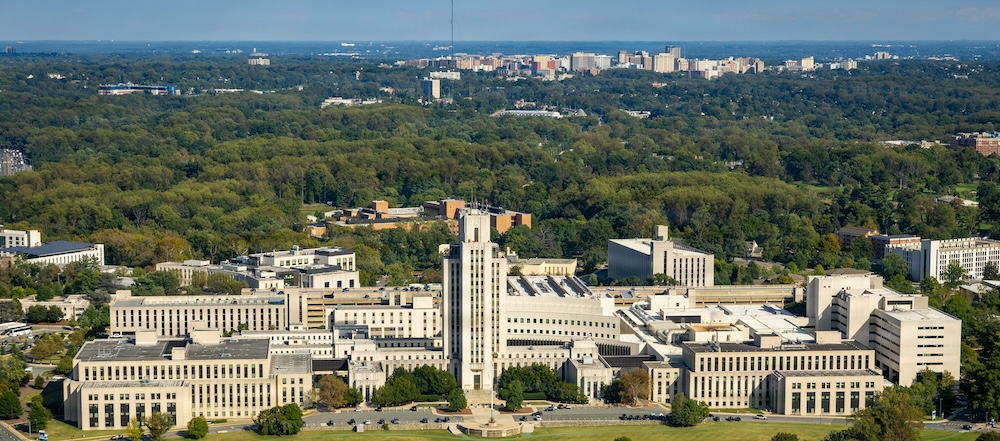
The closure of the National Capital Consortium Radiation Oncology Residency Program, which trained both military and civilian residents in its history, created an inflection point in which military leadership had to rethink how – and where – they would train future specialists.
Duke stood out not only for its clinical excellence but for its geography. Proximity to Fort Bragg made an Army collaboration logistically feasible. More importantly, Duke offered a structure that aligned with the Army’s evolving needs: rigorous training, strong mentorship and a system already accustomed to working with military physicians.
The result is now an official designation: Duke Radiation Oncology is an Affiliated Army Graduate Medical Education (GME) program – one of the only programs of its kind in the field.
One of the defining features of the Duke-Army partnership is that time spent at Duke counts toward active-duty service, allowing Army trainees to receive top-tier academic training without extending their service obligation – an unusual and meaningful incentive. “This is different from many other civilian programs, where trainees would have to add years to their Army commitment afterward,” explained Dr. Salama.
The Military Experience at Duke
The structure of the military track at Duke reflects the reality that military radiation oncologists are often generalists. “We really try to get a breadth of clinical experiences for our military trainees, as they will likely be practicing in environments where they need a broad clinical foundation,” said Dr. Salama.
The program includes 36-42 months of clinical rotations at Duke University Hospital and the Durham VA Health Care System, paired with 6-12 months of scholarly activity. Compared to the traditional residency track, the only difference is the option for a shorter research period.
For Dr. Chisam, that balance was invaluable.
“The military track within our program is outstanding and highly flexible, allowing residents to tailor their training to their individual goals,” he said. “For me, that meant a more clinically focused experience, balancing disease-site specific rotations at Duke for subspecialty exposure with time at the Durham VA, where I had the opportunity to step back and apply that knowledge in a broader, general practice setting.”
The duality – depth at Duke, breadth at the VA – reflects what many graduates will encounter after residency.
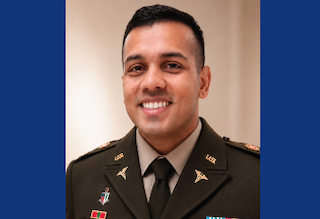
“One of the key strengths of Duke is the integration with the Durham VA,” agreed Avinash Chaurasia, MD, the Army’s specialty leader for radiation oncology and an adjunct faculty member at Duke. “Residents will spend significant time caring for veterans, which is an experience that closely mirrors the population they will serve in the Military Health System.”
The Path to Radiation Oncology
Military trainees often arrive at Duke with experiences that set them apart, and many have already practiced independently, sometimes in high-responsibility roles.
Dr. Chisam served as a general medical officer for Marine Aviation Logistics Squadron 26 at Marine Corps Air Station New River in Jacksonville, North Carolina, before applying to return to residency and being selected for training in radiation oncology. “I was the primary care physician for about 500 Marines while also serving as the Medical Department Head for my unit,” he said. “My experience in the fleet taught me how to manage patients independently and gave me a glimpse of what it means to be the primary physician. It changed how I approached residency when I returned. I had a clearer appreciation for the importance of training as an opportunity to develop the skills and confidence needed for independent practice.”
At Duke, his perspective evolved further. “Radiation oncology is truly a team sport,” he said. “In a large department like Duke’s, teamwork, communication and efficiency are essential to delivering high-quality patient care. My experience at Duke has allowed me to further grow in these areas, which I will carry forward into my future practice in both the clinic and the Navy.”
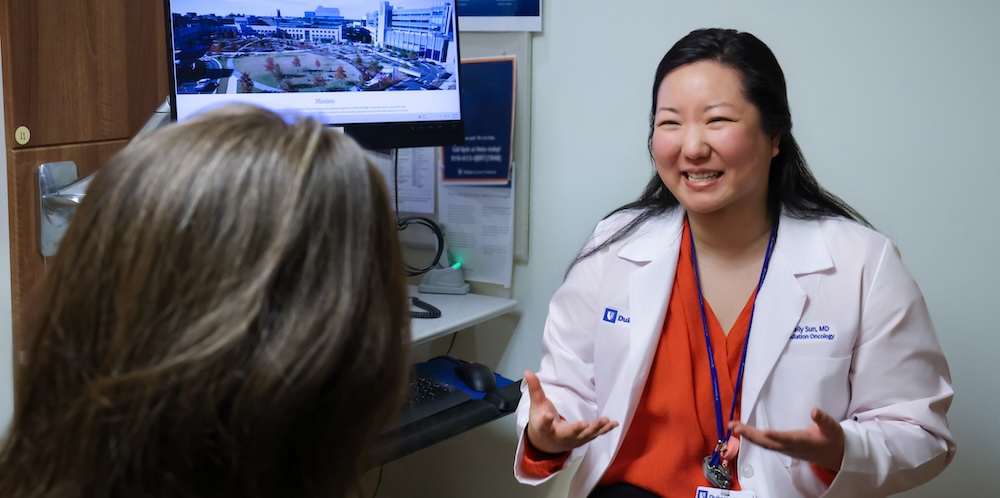
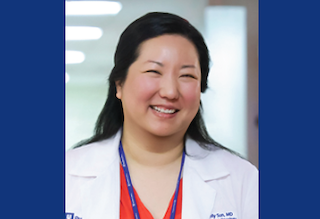
Kelly Sun, MD, the program’s first official Army trainee, has a similar non-linear journey. After attending Uniformed Services University of the Health Sciences (USUHS) and completing an internal medicine residency, she practiced as an attending physician in Hawaii for two years before starting a second residency in radiation oncology at Duke.
“The prospect of applying to and starting a second residency in such a technical and complex field was frankly pretty daunting,” she said. “However, for me, nothing has ever quite matched the mix of radiation oncology as a highly technical, highly multidisciplinary field that remains very patient care–centered. When I thought about what I want my career in medicine to look like over the coming decade, and when the opportunity arose to train in radiation oncology at Duke, the decision to apply felt sure.”
For Dr. Sun, “it goes without saying that the clinical excellence and training at Duke are top tier,” she said. The partnership with the Durham VA and the level of ownership that residents have when caring for veterans were a bonus.
A Shared Work Ethic
Despite differences in background, many military trainees share a work ethic – one that fosters a strong sense of teamwork, mission focus and resilience.
Dr. Sun describes it with a phrase she learned during her time in Hawaii: If can, can. If no can, no can.
“To me, this translates into a practical optimism,” she said. “If something is feasible and good, you commit fully and make it happen. If not, you adapt and move forward.” For her, it’s served as a reminder to be solution-oriented, flexible and focused on delivering the best care within real-world constraints – whether clinical, logistical or patient-specific. “This will definitely be something I take with me beyond residency,” she said. “Resources and circumstances will vary, but the expectation to deliver high-quality, patient-centered care will remain constant.”
Still, training as a military physician comes with unique challenges. Clinical responsibilities must be balanced with the expectations of military service.
“There’s always the pull of having two full-time, sometimes competing ‘jobs’ as a military officer and physician,” said Dr. Sun. “Learning to navigate that tension is a real challenge. Despite this, military medicine pushes you to grow not just as a clinician, but as a leader and problem solver.” And for Dr. Sun, a former “military kid,” it helps her feel connected to the patient population she serves.
Building the Pipeline
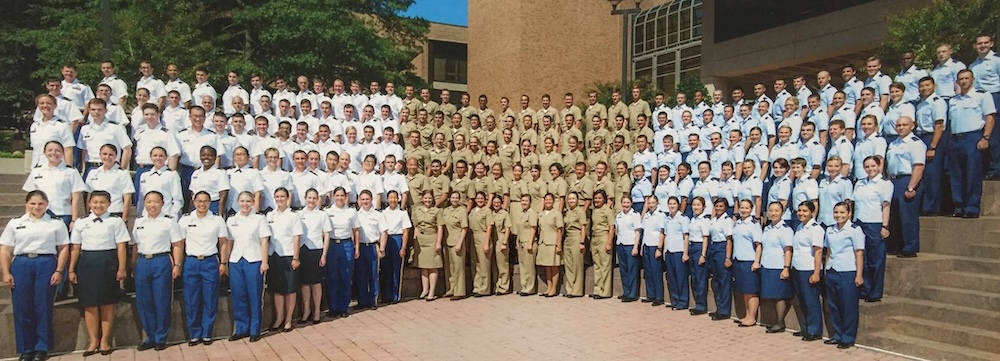
Looking ahead, Duke is focused not just on training military residents, but on building a sustainable pipeline. One key initiative is a new elective for students at USUHS, designed to introduce them to radiation oncology early in their training.
“We aimed to model the rotation after what other departments at Duke had done,” said Sarah Jo Stephens, MD, Duke Radiation Oncology’s associate residency program director. “The initiative is new to our department, but we are hoping to provide improved access for the students of USUHS to explore radiation oncology programs. Our goal is for the rotation to serve as a pipeline for students to consider radiation oncology as a career – hopefully here at Duke! – as well as introduce those students who are candidates to our military residency track.”
Dr. Chaurasia plays a central role in that effort, advising students and helping guide them toward opportunities like Duke. “My approach is to start with the student’s ‘why,’” he said. “If they’re drawn to service, leadership and practicing within a mission-driven system caring for cancer patients, Army radiation oncology can be a uniquely rewarding path. The goal is to support both the individual student and the needs of the Army.”
A Growing Legacy
Today, the Duke military track includes up to one dedicated Army trainee per year, with flexibility to accommodate others who may enter through different pathways. While small in size, its impact is outsized. “We’re so proud of our alumni who are in the military, and all they’ve accomplished,” said Dr. Salama, “and our current residents are truly outstanding. The opportunity to build this program in a formalized capacity will be transformative.”
The Duke-Army partnership represents a commitment not just to excellence in radiation oncology, but to the people who carry that expertise into service.
As Dr. Salama put it, “We’re excited about it, and we’re just getting started.”
Q&A – Dr. Michael Chisam
Resident, Class of 2026
What was your impetus to join the Navy?
Military service has always been an important part of my background. Both of my grandfathers served, one in the Marine Corps and the other in the Navy. My father served for 24 years in the Navy, first on submarines and later as a physician. Growing up, I always knew I wanted to serve in some capacity.
Why Duke?
Beyond its reputation as a world-class cancer center with outstanding clinical training, Duke stood out to me for its long history of training Navy radiation oncologists. I was also particularly excited about the opportunity to train at the Durham VA, where I knew I would be challenged and supported while developing clinical confidence and autonomy in practice.
Q&A – Dr. Kelly Sun
Resident, Class of 2029
How did your prior experience shape your decision to return to radiation oncology?
My time in internal medicine gave me a broad and deeply human perspective on patient care – especially the longitudinal course of chronic illness beyond the acute phase, and how factors outside the clinic, such as community and family support systems, shape a patient’s ability to navigate their health. It reinforced that clinical decisions don’t exist in isolation; they play out over time within the realities of each patient’s life. My internal medicine training has pushed me to think about each patient’s journey beyond a single encounter or hospitalization and to anticipate the support they may need not just during radiation treatment, but in the months and years that follow.
Read Dr. Sun’s full Q&A at duke.is/Sun.
Q&A – Dr. Avinash Chaurasia
Specialty Leader for Radiation Oncology, Army
Why has Duke become a preferred training pathway for Army-sponsored residents?
The Army–Duke Radiation Oncology partnership works because it meaningfully integrates a top-tier academic program with the mission of military medicine. Duke provides high-volume, subspecialized training and strong research mentorship, while Army liaisons like myself remain actively engaged in advising and longitudinal development. For students committed to both oncology and service, the Duke pathway offers earlier immersion in the Military Health System and sustained Army mentorship – an exceptional foundation for a career in military medicine.