Proton Therapy at Duke: Q&A with Dr. Sulman
Duke’s proton therapy center is well underway. The facility is expected to open by 2029 with a total projected cost of $150 million. At capacity, Duke will be able to provide proton therapy to about 800 pediatric and adult patients each year. Erik Sulman, MD, PhD, chair of the department, weighs in.

Duke has long been a leader in cancer care. What does the addition of a proton therapy center mean for the Department of Radiation Oncology’s clinical capabilities and long-term vision?
The proton center is the next chapter in Duke Radiation Oncology’s commitment to delivering the most precise and compassionate cancer care possible. Our approach is “patient first” – the patient is at the heart of everything, especially when investing in technology that will improve outcomes for patients. Proton therapy gives us another powerful tool to reduce unnecessary radiation exposure to healthy tissues while still treating tumors aggressively, which can be especially important for children and patients with complex cancers. Clinically, it expands what we can offer across many disease sites. From an access standpoint, this is incredibly important for North Carolina and the broader Southeast, where many patients currently must travel long distances for proton therapy.
With the site now selected and a projected opening in 2029, what are the most important milestones between now and opening day?
There’s a tremendous amount of work between now and 2029, and much of it happens long before the first patient walks through the doors. Right now, we’re focused on detailed planning and design – making sure the facility is built for where cancer care is headed over the next several decades. Recruitment is another major milestone. We want to bring in outstanding physicians, physicists, therapists and operational leaders who are excited to help build something transformational. What excites me most is that the ingredients are here at Duke in spades – the clinical excellence, the scientific innovation, the collaborative culture and the commitment to improving patient outcomes. The next few years are about bringing all those strengths together into a program that can have national and global impact.
This project was made possible by a historic $50 million philanthropic gift. How does this level of donor support transform what’s possible for patient care and innovation at Duke?
Our most important investments in technology – investments that drive patient outcomes – frankly wouldn’t happen without philanthropy. This level of donor support accelerates everything: the timeline, the scope of innovation, the research infrastructure and ultimately the impact we can have for patients and families. It also allows us to think beyond simply building a facility. We can invest in novel clinical trials, advanced imaging and treatment technologies
and patient support services. Philanthropy gives us the freedom to be ambitious in ways that directly benefit patients.
Looking ahead, how do you see proton therapy evolving over the next decade, and what role will Duke play in shaping the future of this technology?
I think we’re entering a period where proton therapy becomes much more integrated with precision oncology, artificial intelligence (AI) and biologically personalized treatment approaches. I also expect we’ll see major advances in adaptive treatment and combinations with systemic therapies and immunotherapy. Duke is uniquely positioned to help lead that future.
Expanding Access: Q&A with Dr. Siglin
Duke Radiation Oncology will open a mobile unit in Holly Springs this year, increasing capacity to treat patients in our Wake County locations. Josh Siglin, MD, medical director for Duke Radiation Oncology Wake County, weighs in.
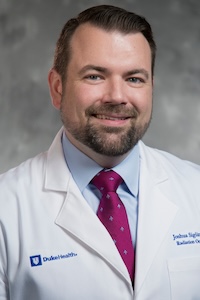
What led to the decision to open a mobile unit?
The main driver for expanding the Wake County radiation oncology program has been the rapid growth in patient volume. I want to recognize the team in Wake County for both growing our program and handling the increased volume while still providing exceptional patient care. We looked at numerous location and machine options to increase our capacity. A mobile Varian Halcyon unit in Holly Springs provided the best solution.
What types of services and patient needs will the mobile unit prioritize when it opens?
In addition to the construction for the Halcyon itself, we are building a complete radiation oncology clinic within the existing Duke Health Holly Springs building that is immediately adjacent to the LINAC. We will have a true Duke Radiation Oncology site to offer consults, treatment and follow-up visits in a single location.
How do you see this expansion impacting patient access across Wake County?
The new site in Holly Springs will help with patient access in several positive ways. This will be our southernmost site in Wake County, allowing us to better serve an area of the state that is seeing rapid population growth. Additionally, the expanded capacity for treatment will allow patients at Holly Springs, as well as our existing Wake County sites, to be treated more quickly. The use of a mobile unit also allows us the ability to adapt if needed, particularly after the new Duke Health Cary Hospital opens.